PM Modi-Putin Car Ride Turns Into a Strong Warning on Trump’s Approach to India Relations
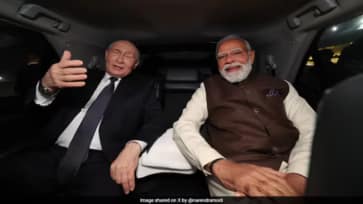
A simple photo from the recent PM Modi-Putin car ride has sparked a big debate in the United States Congress. That image of Prime Minister Narendra Modi sharing a car with Russian President Vladimir Putin during his visit to India last week was displayed prominently in a hearing, serving as a clear signal about potential shifts in global alliances due to President Donald Trump’s policies toward New Delhi.
The PM Modi-Putin car ride happened right after Putin landed in Delhi. Modi personally welcomed him at the airport and then they drove together to the Prime Minister’s official residence on Lok Kalyan Marg. Both countries highlighted this as a mark of their deep personal friendship and strong bilateral ties. It’s not the first time either – they had a similar moment in a Russian-made Aurus car during a summit in China. But this latest PM Modi-Putin car ride caught extra attention abroad.
In a US House Foreign Affairs Subcommittee hearing focused on the strategic partnership between America and India, Democratic lawmaker Sydney Kamlager-Dove, who is the ranking member, put up a large poster of the PM Modi-Putin car ride photo. She used it to argue that it’s Washington’s actions, not India’s, that are harming the relationship. Kamlager-Dove didn’t hold back, saying Trump’s ways are like “cutting off our nose to spite our face.” She stressed that this is causing serious, long-term damage to the trust between the two nations.
Pointing directly at the image of the PM Modi-Putin car ride, she remarked that being a pushy partner comes with real costs, and this picture speaks volumes on its own. She added that no one wins a peace prize by forcing key allies closer to rivals. The congresswoman accused Trump of undoing years of careful work built by both parties. She pointed out that the previous administration left behind a strong foundation – things like a stronger Quad alliance, growing defense technology cooperation, and reliable supply chains – only for it to be thrown away now.
Kamlager-Dove went further, warning that if things don’t change, history might remember Trump as the president who lost India to closer ties with others. She tied this directly to Trump’s tough economic moves, including 25 percent “Liberation Day” tariffs on Indian goods, plus another 25 percent on India’s purchases of Russian oil. That adds up to a hefty 50 percent burden, and she noted it’s actually higher than what’s imposed on China right now. In her view, this self-defeating approach is pushing India away, making moments like the PM Modi-Putin car ride a symbol of where things could head.
Democrats in the hearing also criticized other policies hurting everyday connections between the two countries. One big issue is the proposed $100,000 fee for H-1B visas, where Indians hold about 70 percent of them. Kamlager-Dove called this a slap in the face to the huge contributions Indian professionals have made in America, from tech to innovation.
Experts giving testimony echoed these concerns. Dhruva Jaishankar from ORF America mentioned that trade talks were making good progress earlier in the year, getting quite close to a deal by mid-summer. He suggested that with some political commitment from Washington, a fair agreement is still possible, as India is actively seeking free trade partnerships elsewhere too.
Other witnesses warned that fixating on tariffs could eclipse more pressing matters, like balancing China’s influence or securing global supply chains. One expert described the US-India partnership as low-cost but high-reward for America, saying it would be a massive mistake to throw away the hard-earned trust.
Overall, the hearing underlined how trade disputes have become the hottest topic in US-India relations, with wider implications for geopolitics. The simple act captured in the PM Modi-Putin car ride photo has become a powerful reminder for US policymakers. It shows that coercive tactics might backfire, strengthening bonds between India and Russia at a time when America needs strong allies in the region.
Putin’s visit itself was short but significant, reinforcing longstanding defense and energy ties between New Delhi and Moscow. Modi going out of his way for the airport pickup and the shared PM Modi-Putin car ride drove home the point that India values this relationship independently.
As tensions over tariffs continue, voices like Kamlager-Dove’s are urging a rethink. They argue that friendship, not force, is the way to keep partnerships solid. If the current path persists, more images like the PM Modi-Putin car ride could pop up as evidence of shifting dynamics. For now, this one photo has turned into a wake-up call in Washington about handling ties with one of the world’s rising powers.
In the end, the debate highlights a key question: will the US adjust its strategy to nurture the alliance, or risk seeing India deepen other friendships, as vividly illustrated by the recent PM Modi-Putin car ride? Only time will tell, but the message from Congress is clear – change course to avoid lasting regrets.
Leave a Reply