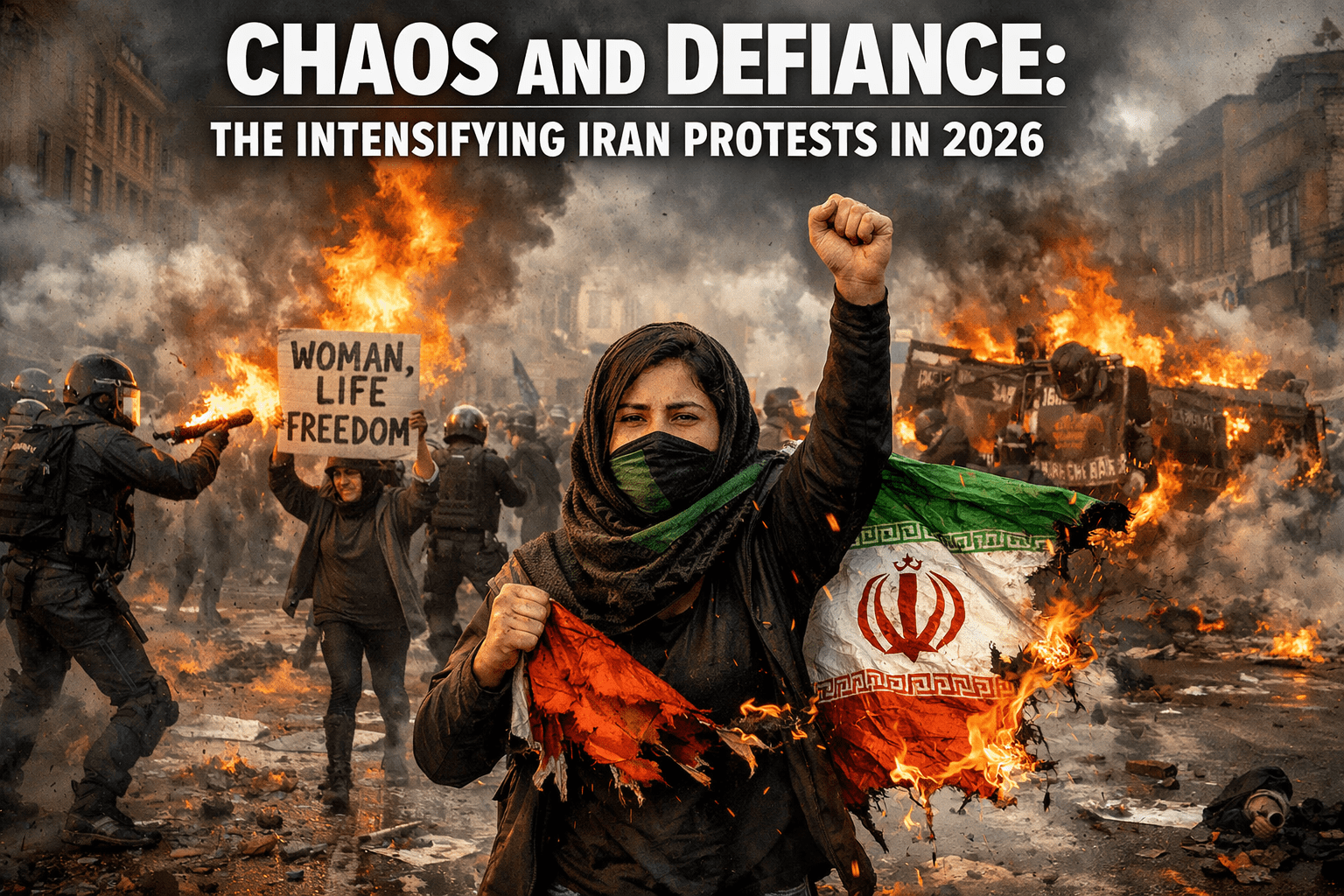
Chaos and Defiance: The Intensifying Iran Protests in 2026
The political landscape of the Middle East is currently witnessing a seismic shift as the Iran protests enter a critical and deadly new phase. What began as a localized outcry over economic mismanagement and a currency crisis has rapidly transformed into a nationwide uprising against the clerical establishment led by Ayatollah Ali Khamenei. As of January 11, 2026, the situation on the ground remains volatile, with the government signaling a brutal intensification of its crackdown against its own citizens.
A Rising Death Toll Amidst a Nationwide Crackdown
The human cost of the Iran protests is climbing at an alarming rate. According to reports from international news agencies and human rights monitors, at least 116 people have lost their lives since this latest wave of unrest began in late December. These fatalities are not concentrated in a single region but are spread across major urban centers and smaller provinces, including Tehran, Kermanshah, and Fars.
The regime’s response has been anything but conciliatory. Security forces have detained over 2,600 individuals, and the streets of Tehran are reportedly under heavy surveillance. Despite the rising death toll and the massive presence of riot police, the demonstrators show no signs of retreating, signaling a deep-seated desire for fundamental political change.
The Threat of the Death Penalty: “Enemies of God”
In one of the most chilling developments of the Iran protests, the country’s Attorney General, Mohammad Movahedi Azad, has issued a direct and terrifying warning to the public. He stated that all those participating in the demonstrations would be charged as an “enemy of God” (Moharebeh). Under Iran’s strict interpretation of Islamic law, this specific charge carries the death penalty.
This move is seen by international analysts as a desperate attempt by the Ayatollah-led regime to instill fear and break the momentum of the movement. By labeling protesters as “enemies of God,” the state is moving beyond simple riot control and into the territory of judicial execution to silence dissent. The world is watching with bated breath as thousands of young Iranians now face the very real threat of the gallows for simply demanding freedom.
The Trump Administration and Potential US Intervention
The international dimension of the Iran protests has been amplified by the vocal support of US President Donald Trump. Taking to social media, Trump declared that “Iran is looking at FREEDOM, perhaps like never before” and stated emphatically that the USA stands “ready to help.” This rhetoric has predictably drawn the ire of Tehran’s leadership.
Supreme Leader Ayatollah Ali Khamenei has struck back, accusing the US President of having his “hands stained with the blood” of Iranians. The war of words has escalated to a point where the Israeli military has reportedly been placed on “high alert” in anticipation of potential US intervention or regional spillover. The tension between Washington and Tehran is at its highest point in years, with the Iran protests acting as the flashpoint for a possible larger conflict.
Internet Blackouts and the Exiled Prince
To control the narrative and prevent the coordination of further rallies, the Iranian government has implemented a near-total internet blackout. For several days, Iranians have been cut off from international online services, making it nearly impossible for families to communicate or for activists to share footage of the crackdown with the outside world.
However, the movement found a renewed spark of energy following a call to action by Reza Pahlavi, the exiled crown prince of Iran. Pahlavi, the son of the deposed Shah, urged his compatriots to move beyond just marching and to begin “seizing and holding city centers.” This shift in strategy—from protest to occupation—has made the Iran protests even more difficult for the regime to manage, as city squares in various provinces become battlegrounds for the country’s future.
What Lies Ahead for the People of Iran?
As the Iran protests continue to rage, the central question remains: how long can the regime hold on through force alone? With the economy in shambles and a significant portion of the population willing to risk the death penalty for a chance at a different life, the status quo is increasingly untenable.
The combination of internal defiance, led by figures like Pahlavi, and external pressure from the Trump administration has created a “perfect storm” for the Iranian leadership. Whether this leads to a democratic transition or a darker period of state-sponsored violence remains to be seen. One thing is certain: the Iran protests have fundamentally changed the relationship between the Iranian people and the Ayatollahs, and there may be no turning back.
The world continues to monitor the situation, hoping for a peaceful resolution but preparing for the worst as the Islamic Republic enters what may be its most challenging chapter yet.
Check out our latest news updates: Today’s Horoscope and Panchangam: Sunday, January 11, 2026
Leave a Reply