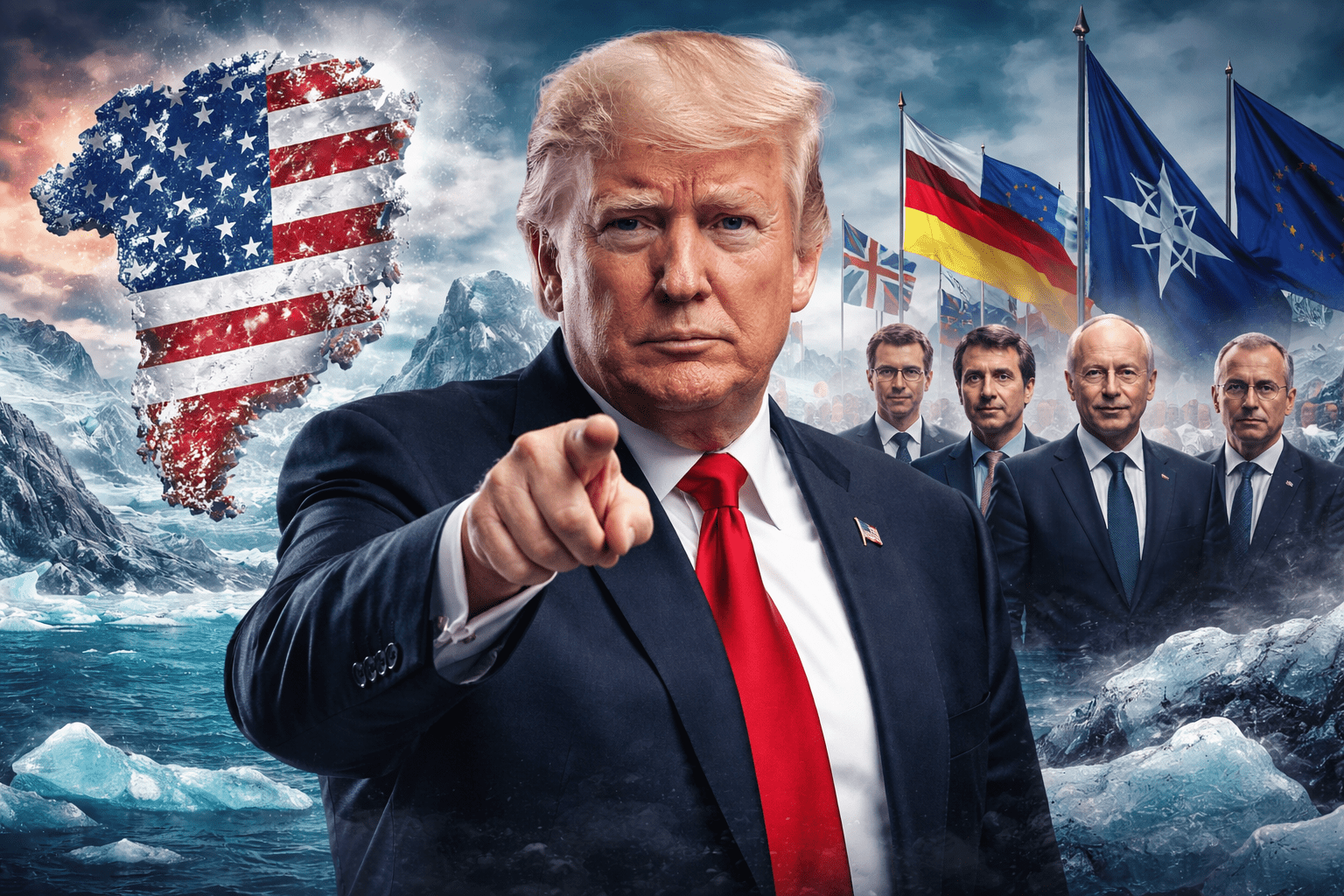
U.S. Political Crisis Deepens: Trump’s Greenland Strategy Sparks Global Backlash
In breaking U.S. political news, President Donald Trump’s controversial push to acquire Greenland has triggered intense diplomatic backlash and thrown long-standing international alliances into uncertainty. The latest U.S. political developments at the World Economic Forum have drawn sharp criticism from NATO partners and raised serious questions about the future of transatlantic cooperation.
At the center of this U.S. political storm is Trump’s assertion that Greenland should be part of the United States — a stance that fueled heated negotiations and alarm across European capitals. Trump emphasized that the United States would avoid military force in securing Greenland, but hinted at economic retaliation if European resistance persisted.
Trump’s Bold Greenland Proposal and Immediate Global Reaction
President Trump’s remarks on Greenland dominated global discussions, prompting immediate diplomatic responses from Denmark and other NATO allies who reiterated their sovereignty over the Arctic territory. European leaders condemned any suggestion of territorial negotiation under pressure, warning that such U.S. political tactics could undermine decades of strategic cooperation built on mutual respect.
This latest U.S. political controversy has sparked fears of a new era of economic conflict. Trump suggested that tariffs might be deployed against countries opposing his Greenland initiative, exacerbating tensions in an already strained U.S.–Europe relationship.
Economic Ripples from U.S. Political Decisions
Trump’s Greenland strategy has not only diplomatic but also economic implications. Financial markets showed signs of volatility in response to the possibility of tariffs on European imports, with analysts warning of broader impacts on investment and trade flows. American energy exports, particularly liquefied natural gas, are now under scrutiny as political tensions threaten established trade patterns.
Economists argue that these latest U.S. political moves could disrupt years of economic integration, affecting investors, retirees, and global market confidence. Retirement funds like 401(k)s are anticipated to feel the effects of market shifts tied to geopolitical uncertainty.
U.S. Political Strategy Faces Global and Domestic Scrutiny
International criticism of Trump’s strategic approach has been widespread. From academic scholars to global leaders, many have called the Greenland policy a risky gamble that could weaken U.S. influence. Notable figures at the World Economic Forum stressed that traditional diplomatic alliances must not be compromised for unilateral gains.
Inside the United States, the political fallout is expected to shape domestic debates in the lead-up to the 2026 midterm elections. Democratic critics have accused the administration of jeopardizing national security and alienating partners without clear strategic benefit, while Trump supporters argue that bold action is necessary to secure America’s position in the world.
What Comes Next in the U.S. Political Arena
As global reactions continue, the U.S. political landscape is poised for continued turbulence. Trump’s Greenland initiative, combined with broader policy shifts, may redefine how the United States engages with allies and rivals alike. Political analysts predict that ongoing debates over executive authority, national security, and economic direction will dominate both global headlines and U.S. domestic discourse in the coming months.
For now, the world watches as the United States navigates a pivotal moment in its political history — one that could alter long-standing diplomatic frameworks and reshape global alliances for years to come.
Leave a Reply