Iran Calls on UN to Act Against Trump’s Reckless Threats Over Protests
Iran Urges UN to Respond to Trump’s Reckless Threats Over Protests
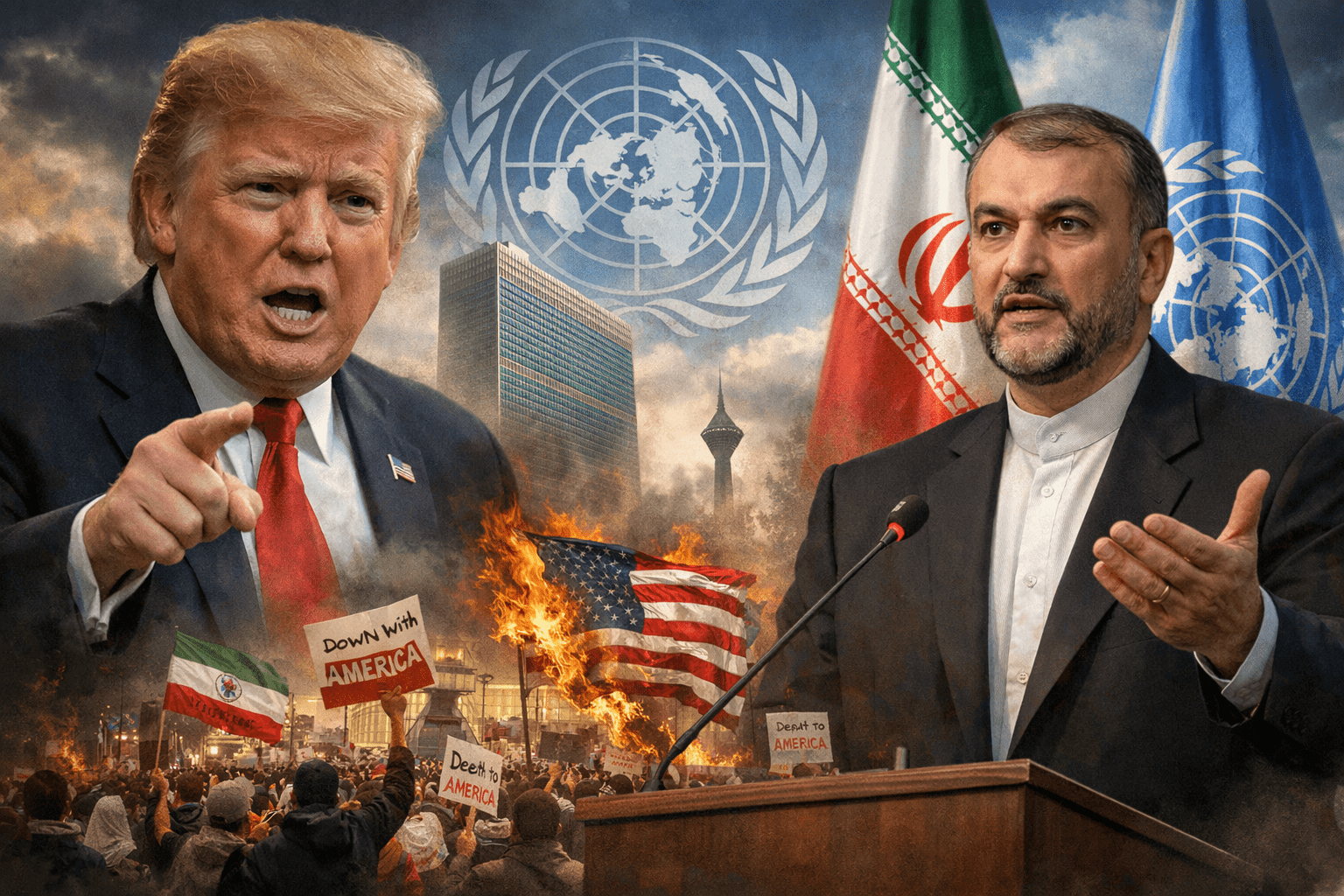
The political tension between Iran and the United States has once again escalated, this time over Trump’s reckless threats made during ongoing protests in Iran. Tehran has formally appealed to the United Nations, urging the global body to condemn what it describes as unlawful and provocative remarks by U.S. President Donald Trump. The confrontation highlights the fragile state of international diplomacy and the growing risks of external interference in Iran’s domestic unrest.
Iran’s Appeal to the United Nations
Iran’s ambassador to the UN, Amir Saeed Iravani, submitted a letter to Secretary-General António Guterres and the President of the UN Security Council. In this letter, he called for an immediate and firm condemnation of Trump’s reckless threats, which he argued violate international law and the UN Charter.
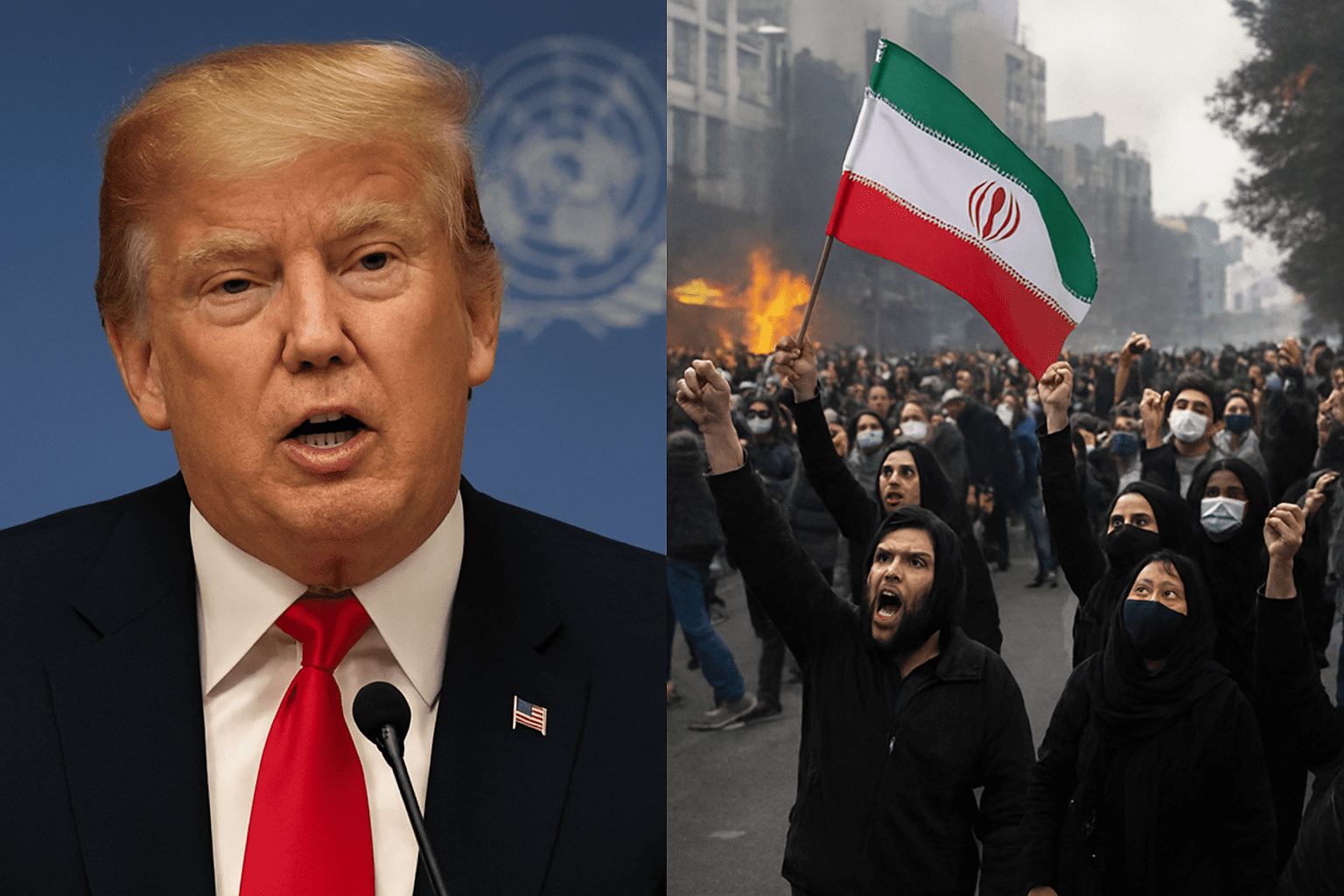
The letter was dispatched shortly after Trump declared that the United States was “locked and loaded and ready to go” if more protesters were killed during demonstrations in Iran. These protests, triggered by rising living costs and economic hardship, have spread across the country, intensifying political instability. For Iran, Trump’s remarks were not just inflammatory—they were seen as a direct threat to its sovereignty.
The Context of the Protests
The protests in Iran have been fueled by economic distress, inflation, and dissatisfaction with government policies. Citizens have taken to the streets demanding relief from rising costs of living, and the demonstrations have occasionally turned violent. Trump’s comments, however, added an international dimension to the crisis. By warning of U.S. intervention, he effectively positioned Washington as a potential actor in Iran’s internal affairs.
Iran’s leadership views Trump’s reckless threats as an attempt to exploit domestic unrest for geopolitical gain. Officials argue that such statements encourage instability and could be used as a pretext for military action. This is why Tehran insists that the UN must step in to prevent further escalation.
Why Iran Sees Trump’s Remarks as Dangerous
Iran’s letter to the UN emphasized several points:
- Violation of sovereignty: Tehran believes Trump’s reckless threats undermine the principle of non-interference in domestic affairs.
- Risk of escalation: Any external involvement could inflame tensions and destabilize the region further.
- Breach of international law: Iran argues that Trump’s statements amount to unlawful threats of force against a UN member state.
By framing the issue in legal and diplomatic terms, Iran hopes to rally international support and pressure the United States to retract its stance.
The UN’s Role in De-escalation
The United Nations has historically played a mediating role in conflicts involving Iran and the U.S. However, the effectiveness of the UN often depends on consensus among Security Council members. Iran’s appeal is essentially a test of whether the international community is willing to confront Washington over Trump’s reckless threats.
If the UN responds with a strong condemnation, it could help de-escalate tensions and reaffirm the principle of sovereignty. On the other hand, silence or inaction may embolden further provocative statements, leaving Iran isolated in its diplomatic struggle.
Global Reactions and Implications
The controversy surrounding Trump’s reckless threats has sparked debate among analysts and diplomats worldwide. Some argue that Trump’s remarks were intended as a deterrent, signaling U.S. readiness to protect human rights in Iran. Others see them as reckless and inflammatory, potentially worsening an already volatile situation.
For Iran, the stakes are high. The country is grappling with economic hardship, internal dissent, and regional rivalries. Any perception of foreign interference could strengthen hardline factions within the government, making reform and dialogue even more difficult.
Conclusion: A Call for Responsible Diplomacy
The confrontation over Trump’s reckless threats underscores the delicate balance of international diplomacy. Iran’s appeal to the UN is not just about condemning one statement—it is about defending sovereignty, preventing escalation, and preserving stability in a region already fraught with conflict.
Whether the UN chooses to act decisively or remain cautious will shape the trajectory of this dispute. For now, Iran continues to insist that the world must hold Washington accountable for its words, warning that unchecked rhetoric could have dangerous consequences.