Hong Kong Court Jails Media Tycoon Jimmy Lai for 20 Years
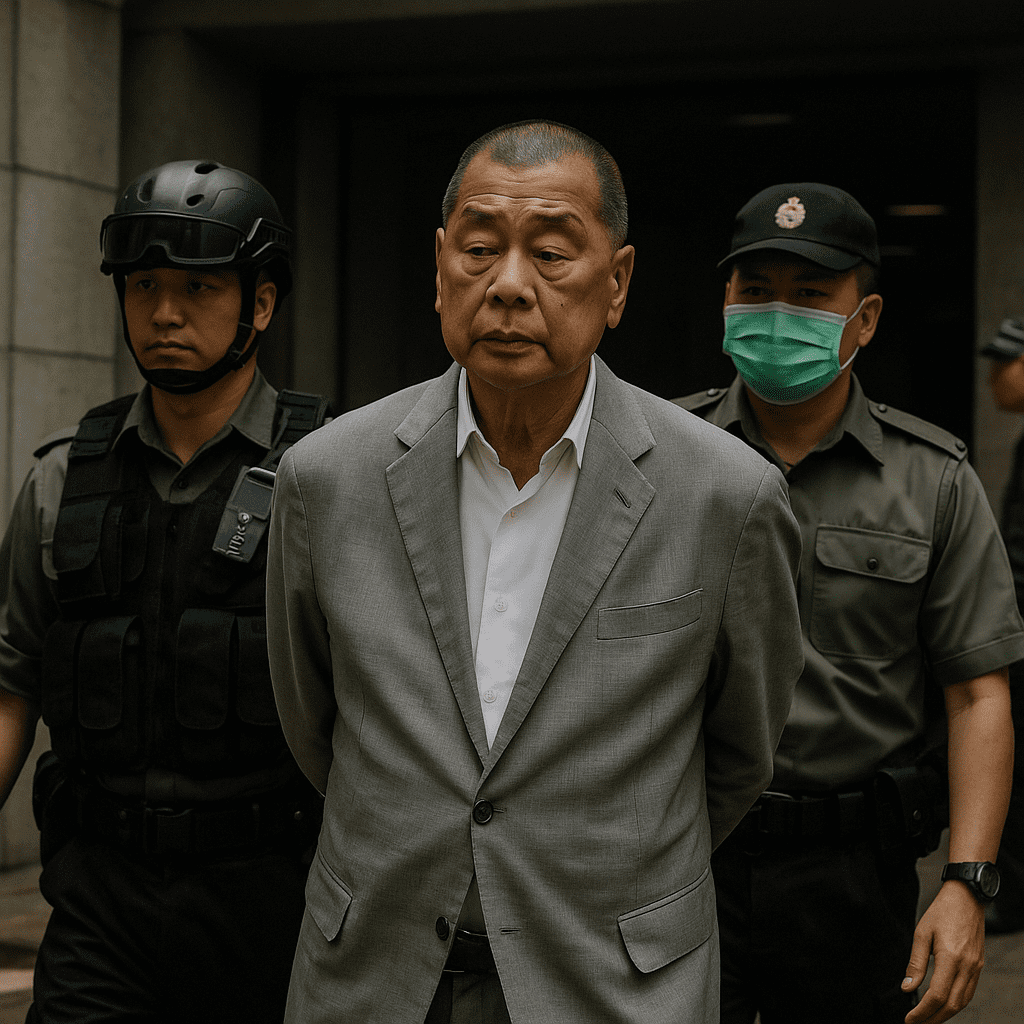
A Hong Kong court has delivered a significant sentence, condemning prominent pro-democracy media tycoon and British citizen Jimmy Lai to 20 years in prison. The verdict, stemming from charges under the region’s National Security Law, marks a critical moment in the ongoing legal landscape of the special administrative region.
This lengthy incarceration has immediately ignited a stark division of opinion. Supporters of Mr. Lai view the judgment as a severe blow to fundamental freedoms and an effective “death sentence” for the 76-year-old. Conversely, authorities maintain that the ruling stands as a testament to the robust application of the rule of law within Hong Kong’s judicial system.
The Verdict and Its Immediate Repercussions
The sentence imposed on Jimmy Lai follows his conviction on two counts of collusion with foreign forces and one count of conspiracy to publish seditious publications. These charges fall under the sweeping National Security Law, enacted by Beijing in June 2020, which has profoundly reshaped Hong Kong’s legal and political environment.
Lai, a vocal critic of Beijing and a staunch advocate for democracy, was the founder of the now-defunct Apple Daily newspaper. The publication, once a beacon of critical journalism, was forced to cease operations in 2021 after its assets were frozen and key staff members arrested.
Background of Jimmy Lai and Apple Daily
Jimmy Lai emerged from humble beginnings to establish a vast media empire, most famously Apple Daily, which became synonymous with outspoken pro-democracy sentiment in Hong Kong. For decades, the newspaper provided an alternative voice, often challenging both the local Hong Kong government and Beijing.
His unwavering stance made him a prominent figure in the city’s protest movements and a target for authorities. Lai’s British citizenship and his international connections became central to the charges of “collusion with foreign forces,” alleging his efforts to lobby foreign governments for sanctions against Hong Kong and Chinese officials.
The National Security Law and its Impact
The National Security Law (NSL) was introduced in response to the widespread pro-democracy protests of 2019. Its stated aim is to curb secession, subversion, terrorism, and collusion with foreign forces. However, critics argue that the law has been used to suppress dissent and curtail civil liberties previously enjoyed under the “One Country, Two Systems” framework.
Since its implementation, the NSL has led to numerous arrests of pro-democracy activists, politicians, and journalists. It grants broad powers to authorities, including the ability to conduct trials without a jury in certain national security cases, a significant departure from Hong Kong’s common law tradition.
Differing Interpretations: Rule of Law vs. Suppression
The Hong Kong government and Beijing consistently argue that the NSL is essential for maintaining stability and ensuring national security in the city. They assert that all prosecutions, including that of Jimmy Lai, are conducted strictly according to legal procedures and demonstrate the impartial application of the rule of law.
Conversely, human rights organizations, international press freedom watchdogs, and numerous Western governments contend that the law is being weaponized to stifle political opposition and dismantle independent media. They point to the closure of Apple Daily and the arrests of its senior executives as evidence of a systemic crackdown on press freedom.
International Reactions and Concerns
The sentencing of Jimmy Lai has drawn condemnation from various international bodies and nations. The United Kingdom, to which Lai holds citizenship, has repeatedly called for his release and expressed deep concern over the erosion of freedoms in its former colony.
Similarly, the United States and the European Union have voiced apprehension, highlighting the implications for Hong Kong’s autonomy and its reputation as an international financial hub. These concerns underscore a broader geopolitical tension surrounding the future of Hong Kong and its relationship with mainland China.
The Future of Press Freedom in Hong Kong
The verdict against Jimmy Lai sends a chilling message to independent journalists and media outlets remaining in Hong Kong. It reinforces fears that the space for critical reporting and dissenting voices is rapidly shrinking under the shadow of the National Security Law.
Observers suggest that the long sentence will likely further diminish international confidence in Hong Kong’s commitment to free expression and an independent judiciary. The case stands as a stark indicator of the profound changes sweeping through the city, fundamentally altering its civic and media landscape.