Top 10 Richest Families in the World in 2025: Walton, Al Nahyan, Ambani Lead the Pack
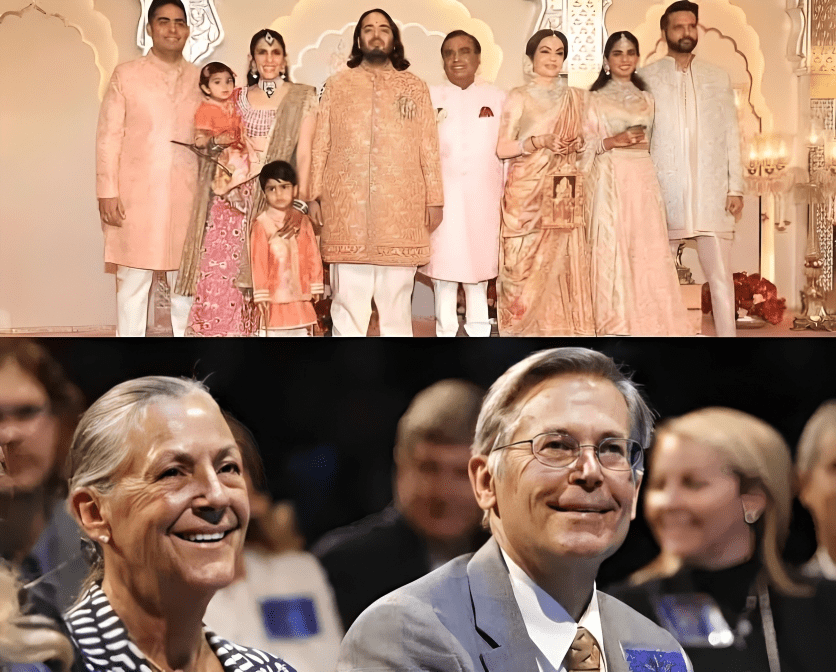
Top 10 Richest Families in the World: 2025 Rankings Revealed
Global dynasties shaping the future of wealth
The latest Bloomberg report has unveiled the top 10 richest families in the world for 2025, showcasing how dynastic wealth continues to dominate global economies. These families are not just rich—they are economic powerhouses, steering industries from retail and oil to luxury fashion and media. With a combined net worth of over $2.9 trillion among the top 25 families, the concentration of wealth is more pronounced than ever.
Walton Family Leads the Pack
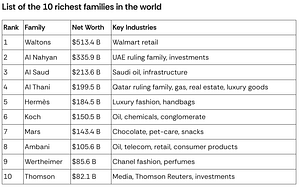
At the summit of the top 10 richest families in the world is the Walton family, heirs to the Walmart empire. With a staggering net worth of $513.4 billion, the Waltons maintain their dominance thanks to Walmart’s global retail footprint of over 10,700 stores. Their influence extends beyond commerce, shaping consumer behaviour and supply chains worldwide.
Middle Eastern Monarchs Command Billions
Following closely are royal families from the Middle East:
- Al Nahyan family of Abu Dhabi ranks second with $335.9 billion, leveraging their control over UAE’s oil wealth and diversified investments.
- Al Saud family, the ruling dynasty of Saudi Arabia, climbs to third place with $213.6 billion, fueled by oil revenues and infrastructure expansion.
- Al Thani family of Qatar secures fourth with $199.5 billion, thanks to their stakes in natural gas, luxury real estate, and global investments.
These monarchies exemplify how sovereign wealth and strategic investments can sustain generational affluence.
Luxury and Conglomerates Dominate Mid-Ranks
The fifth spot is held by the Hermès family, whose legacy in luxury fashion and handbags has amassed $184.5 billion. Their brand’s exclusivity and global appeal continue to drive profits.
Next is the Koch family, with $150.5 billion, built on a diversified portfolio spanning oil, chemicals, and industrial conglomerates. Their influence in American politics and business is well documented.
The Mars family, famous for chocolate and pet-care products, ranks seventh with $143.4 billion, proving that consumer goods can be a lucrative long-term play.
India’s Ambani Family Makes the Elite List
India’s pride, the Ambani family, is the only Indian name in the top 10 richest families in the world. With a net worth of $105.6 billion, they rank eighth globally. Their empire, Reliance Industries, spans oil refining, telecom (Jio), retail, and consumer products. Mukesh Ambani’s strategic diversification and digital push have propelled the family into global prominence.
This inclusion marks a significant milestone for Indian business families, highlighting their growing influence on the world stage.
Fashion and Media Close the List
The ninth and tenth spots are held by:
- Wertheimer family of Chanel, with $85.6 billion, built on timeless fashion and perfumes.
- Thomson family, owners of Thomson Reuters, with $82.1 billion, showcasing the power of media and information services.
These families demonstrate that cultural capital—fashion and media—can be just as lucrative as oil or retail.
The Rise and Resilience of Dynastic Wealth
The top 10 richest families in the world are not just wealthy—they are resilient. Their fortunes have weathered economic downturns, political shifts, and technological disruptions. What sets them apart is their ability to adapt, diversify, and maintain control across generations.
Bloomberg’s report also notes a $358.7 billion increase in collective wealth from the previous year, driven by rising stock prices and global demand. This surge underscores the widening gap between dynastic wealth and emerging entrepreneurs.
What the Rankings Reveal
The top 10 richest families in the world offer a glimpse into how legacy, industry dominance, and strategic investments shape global wealth. From Walmart’s retail empire to Reliance’s diversified portfolio, these families are more than rich—they are architects of the modern economy.
As wealth continues to concentrate, the influence of these families will likely grow, shaping markets, policies, and consumer trends for years to come.
Check out our Latest News Updates: India-Oman Free Trade Agreement: Unlocking New Trade Opportunities